How Do You Write a Dissertation Methodology Chapter?
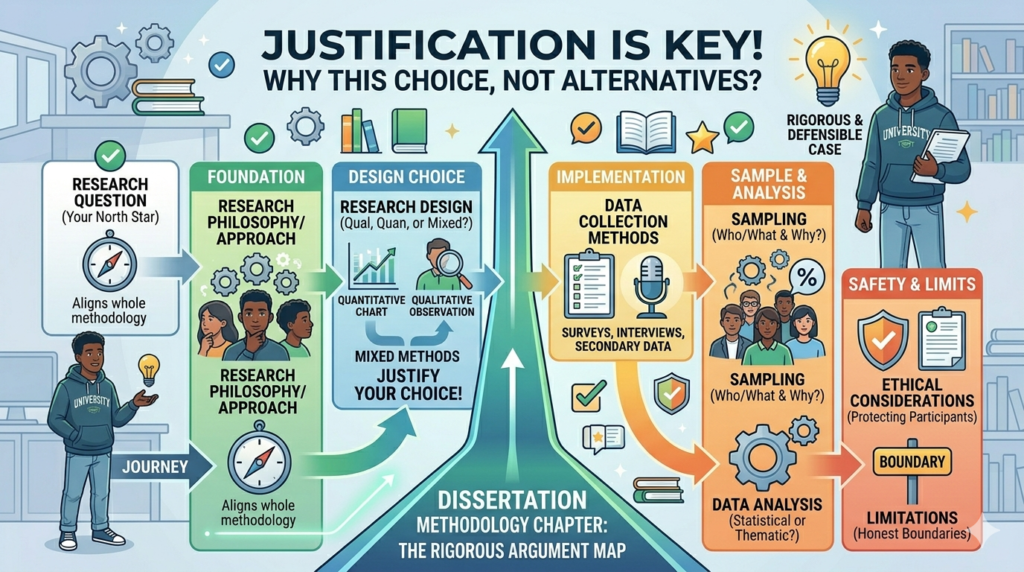
A dissertation methodology chapter explains how you carried out your research, then justifies why those choices were the right ones for your question. It is not a description of what you did. It is an argument that your approach was rigorous, defensible, then capable of answering your research question. The methodology is often the chapter […]
What Is a Capstone Project? Types and Examples
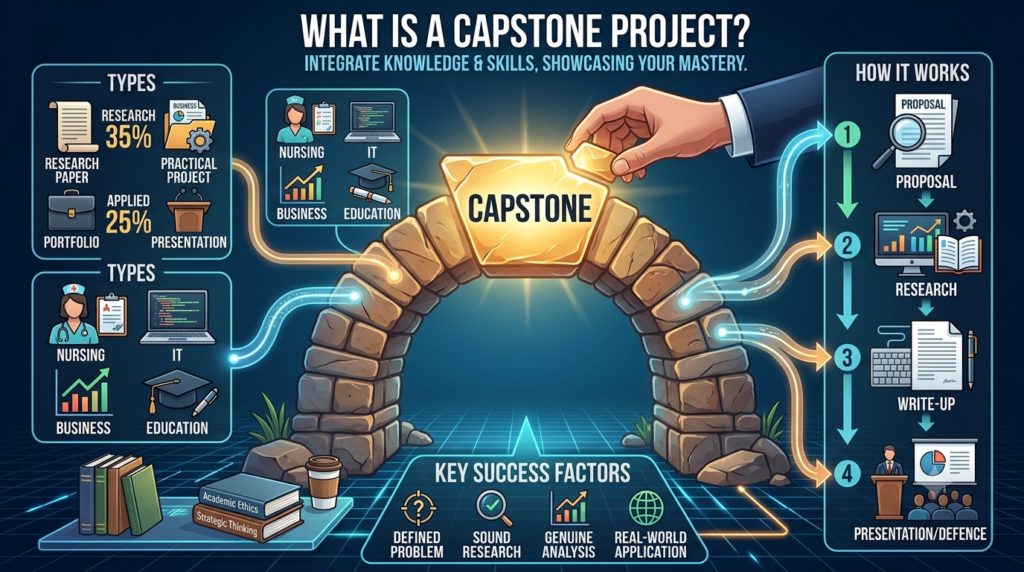
A capstone project is a final piece of work that pulls together everything you learned on your course to solve a real problem. It is common in US programmes and in applied subjects. Unlike a dissertation, it is usually applied and practical rather than purely research based, and you choose the problem yourself. The word […]
How Long Does It Take to Write a 2000 Word Assignment?
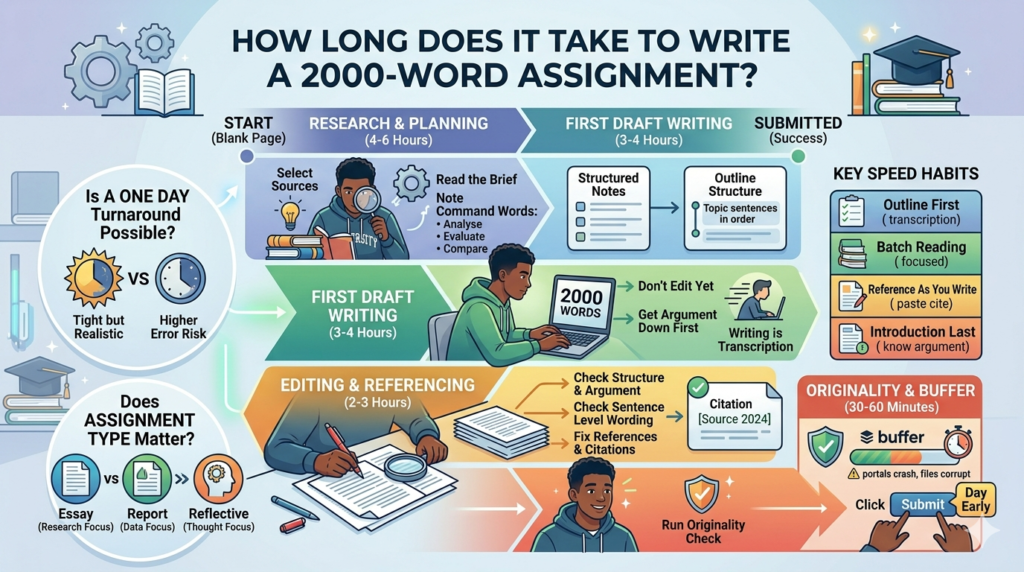
A 2,000 word assignment takes most students 8 to 14 hours from blank page to final submission, spread across research, planning, writing, then editing. The writing itself is the smallest part. Reading, thinking, then redrafting take the bulk of the time, which is why starting early matters more than writing fast. The honest answer depends […]
How to Structure a University Assignment: Formats That Win Marks
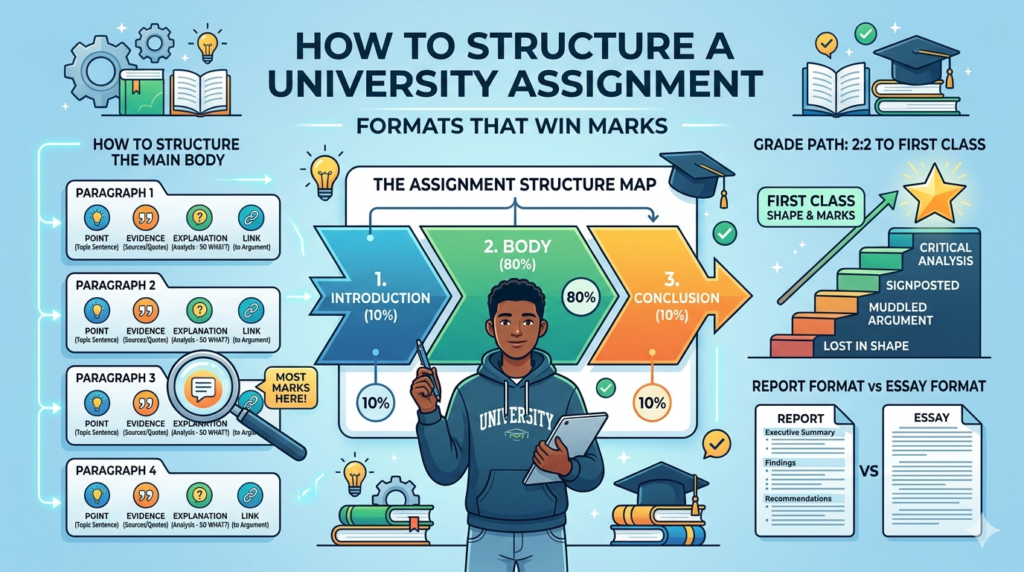
A university assignment follows a clear three part shape: an introduction that states your argument, a body that develops it in focused paragraphs, then a conclusion that ties it back to the question. Get that structure right and you make the marker’s job easy, which is what moves a piece from a 2:2 into 2:1 […]
Does Turnitin Detect AI and ChatGPT Writing?

Yes. Turnitin has an AI writing indicator that estimates how much of your text reads as AI generated. It is separate from the similarity score and it is not perfect. It can flag human writing as AI and miss edited AI text, so the result is a prompt for review, not a verdict. Since AI […]
Is Using ChatGPT for Essays Plagiarism?
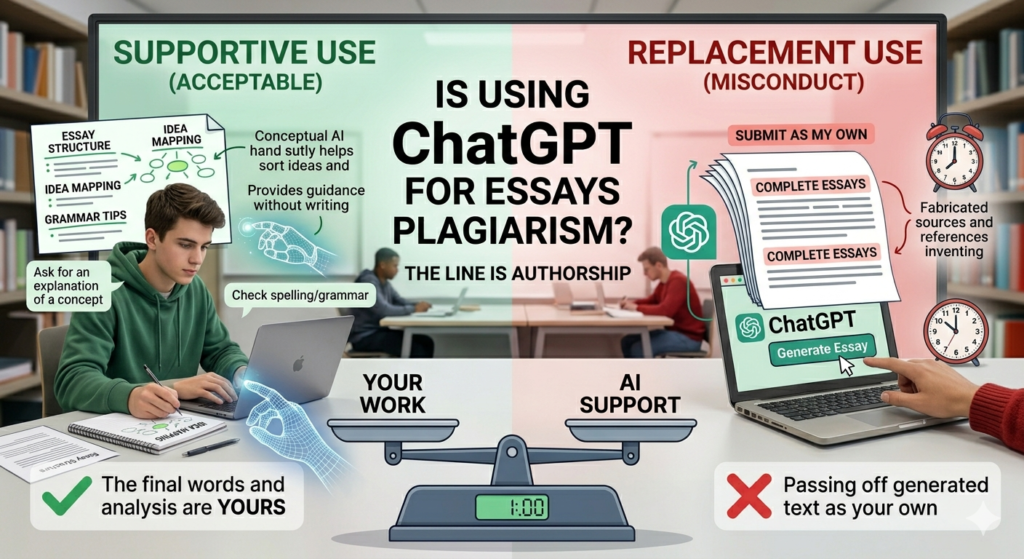
Using ChatGPT is not automatically plagiarism, but submitting AI written work as your own usually breaks academic integrity rules. Most universities now treat undisclosed AI use as misconduct. Using it to brainstorm or check grammar is generally fine. Passing off generated text as your own writing is the line most institutions draw. The rules around […]
What Counts as Plagiarism? Types and Examples
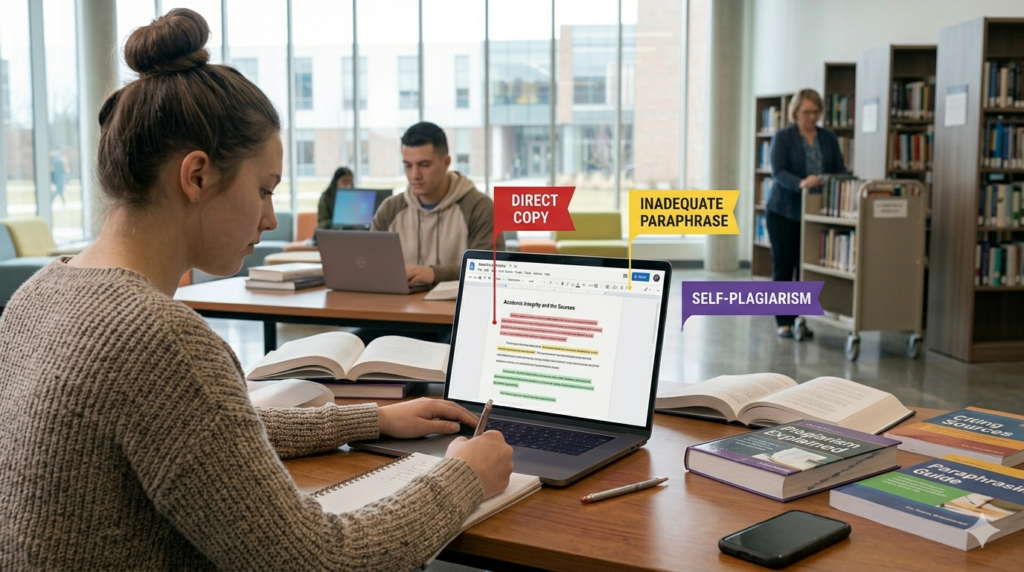
Plagiarism is the act of using someone else’s words, ideas, research, or creative work without giving proper credit and presenting it as your own. It can happen intentionally or by mistake, but both forms can lead to serious academic and professional consequences. This guide explains the different types of plagiarism, why it matters, how universities […]
Turnitin Report Colours and Similarity Bands Explained
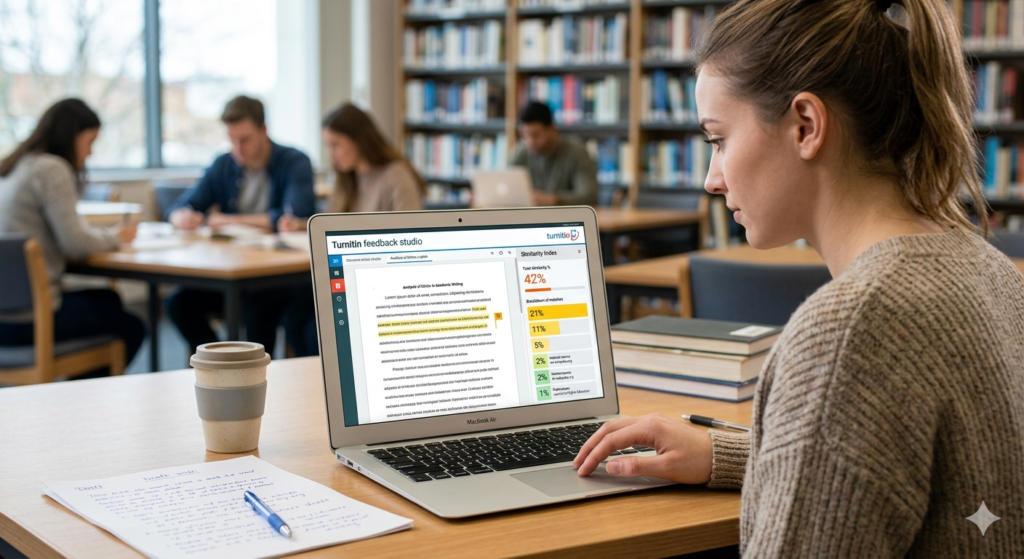
Turnitin report colours indicate the percentage of matching text found in your document, with blue showing no matches, green indicating low similarity, yellow and orange representing moderate similarity, and red showing a high level of matched content. However, these colours do not automatically mean your work is plagiarised, they simply highlight how much text overlaps […]
What Is a Good Turnitin Similarity Score? Percentages Explained (2026)
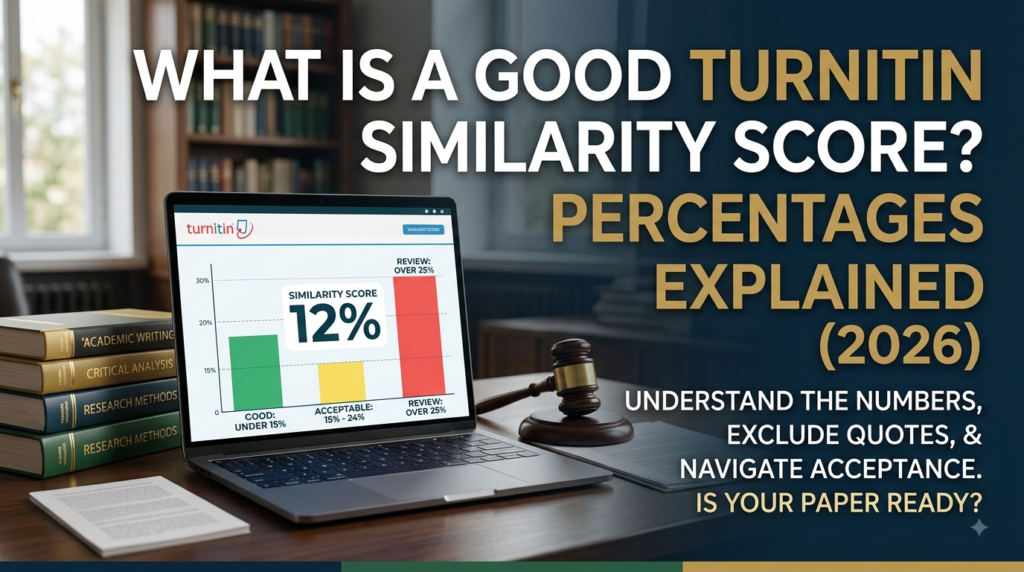
A good Turnitin similarity score is usually under 15%, and most universities treat anything below 20% as acceptable once quotes and references are excluded. There is no official pass mark, so the safe range depends on your institution’s policy. A high score is not proof of plagiarism; it shows matched text you need to check. […]
Scribbr vs Turnitin: Which Plagiarism Checker Is Better? (2026)
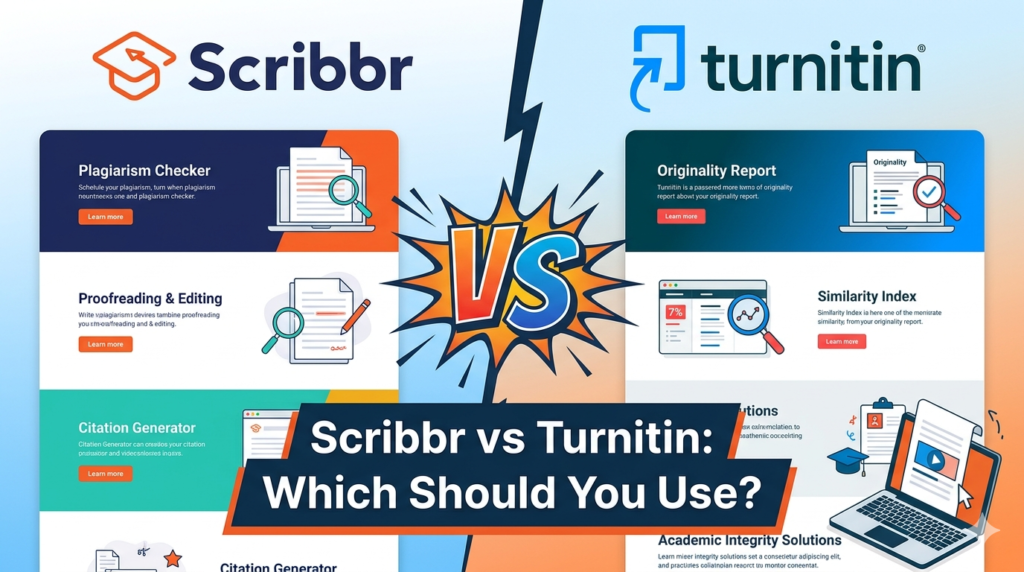
Scribbr and Turnitin both check for plagiarism, but they serve different users. Turnitin is the institutional standard that universities use to grade and store submissions, while Scribbr is a self-service checker students use privately before they submit. Scribbr is powered by Turnitin’s database, so their matching is similar; the real difference is access, storage and […]