Turnitin Similarity Checker: How It Works and What Your Score Means
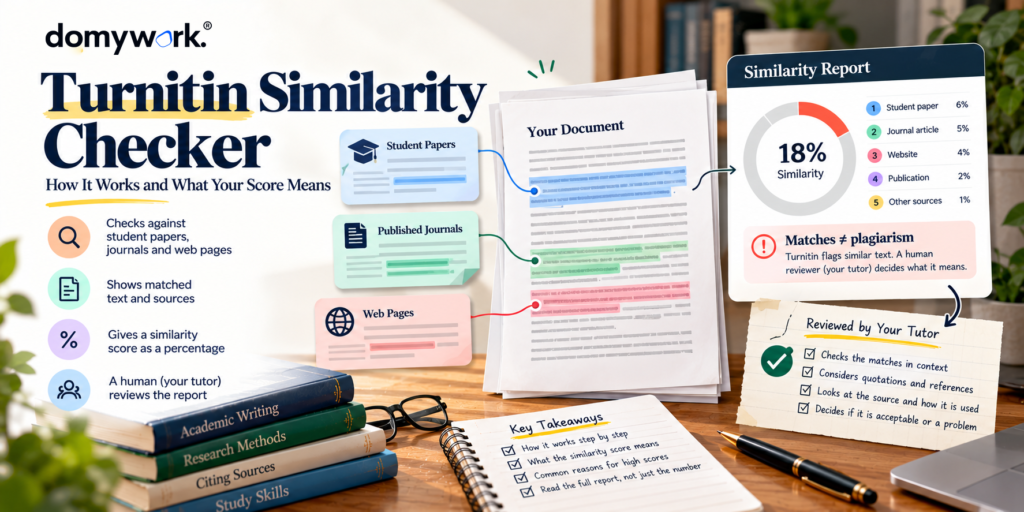
Turnitin is a text matching tool, not a plagiarism judge. It compares your writing against student papers, journals and web pages, then shows a similarity score as a percentage. The score flags overlap so a person can review it. A high number is not proof of cheating, and a low number is not a free […]
What Do UK University Markers Actually Look For?
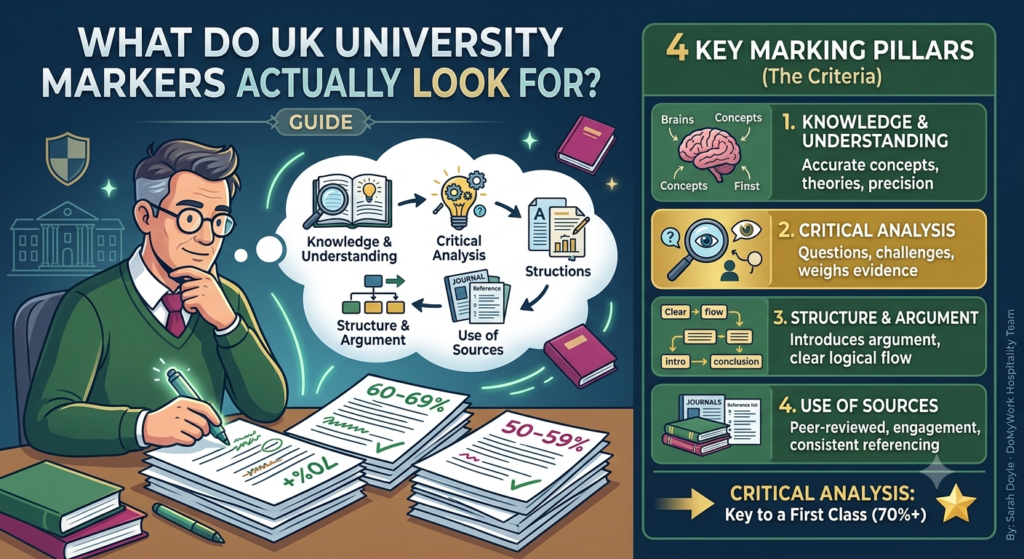
UK university markers assess your work against a published set of criteria, not against your classmates. Across almost every institution, four things carry the marks: how well you understand the topic, how far you analyse rather than describe, how clearly your work is structured, and how well you use academic sources. Critical analysis is the […]
Best Student Side Hustles in the UK That Actually Pay in 2026

The most reliable side hustles for UK students in 2026 are tutoring at 15 to 40 pounds an hour, referral and student rep schemes at 50 to 500 pounds a month with a network, food delivery and rideshare at 10 to 15 pounds an hour, market research and user testing at 20 to 100 pounds […]
What Do UK University Markers Actually Look For? Inside the Marking Criteria

You have spent days working on an essay. You are fairly happy with it. You submit it, wait two weeks, and then get a 58%. No detailed feedback, just a grade and a few vague comments about needing more critical depth. Sound familiar? The truth is, most students submit their work without fully understanding how […]
Harvard Referencing Made Simple: The Only Guide You Will Need in 2026
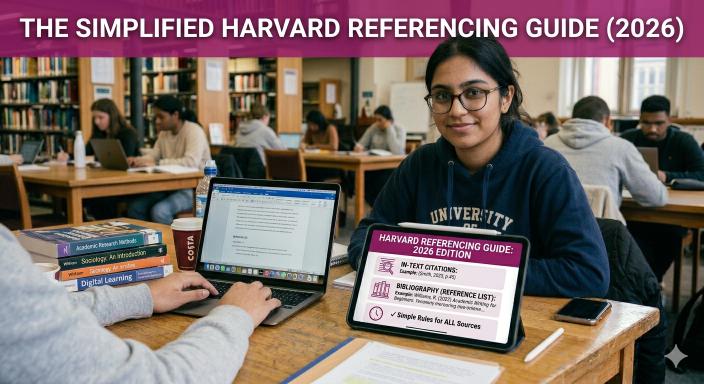
Harvard referencing uses the author and year. You put the surname and year in the text, then give the full details in an alphabetical reference list at the end. Harvard changes slightly between universities, so the main rule is to check your department guide, then keep it the same everywhere. Nobody enjoys referencing, but getting […]
How to Write a First Class Essay at a UK University: A Complete Guide for Students
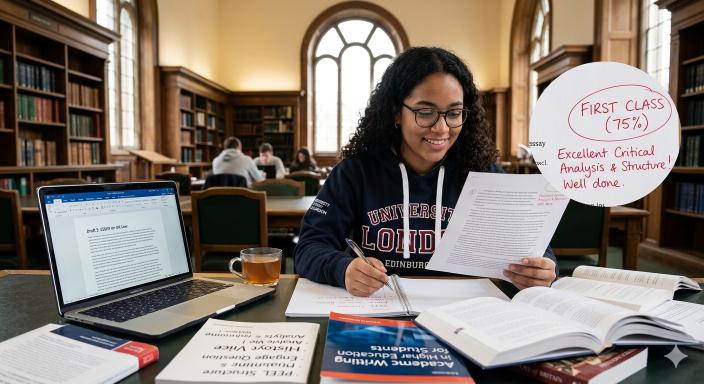
A first class essay argues rather than reports. It is not a longer or better read version of a 2:1. The gap is in critical analysis: whether you weigh the evidence and defend a position, instead of describing what the sources say and stopping there. Writing a first is not a gift a few people […]
How to Write a Dissertation Proposal: Step by Step With an Example

A dissertation proposal is a short pitch, usually 800 to 3,000 words at undergraduate and master’s level, that makes the case for your research. It needs a focused question, a method that can answer it, and enough reading to show where your work fits. Most proposals contain seven sections: title, introduction, research question, literature review, […]
Can Students Access Turnitin Without Their University? Here Is the Truth

There is no way to create your own Turnitin account, because the company sells only to universities, schools, and publishers. If you do not have a university login, the only safe route to a genuine report is a verified third-party service that submits your file through the real Turnitin engine, then returns the official similarity […]
How to Check Your Turnitin Score Before Submitting

You cannot see your official Turnitin score until after you submit, because student access is controlled entirely by your university. The workaround is a private pre-check through a verified third-party service that runs your file through the genuine Turnitin engine, so you can read the same report your tutor will see, fix what needs fixing, […]
How to Reduce Plagiarism in a Dissertation
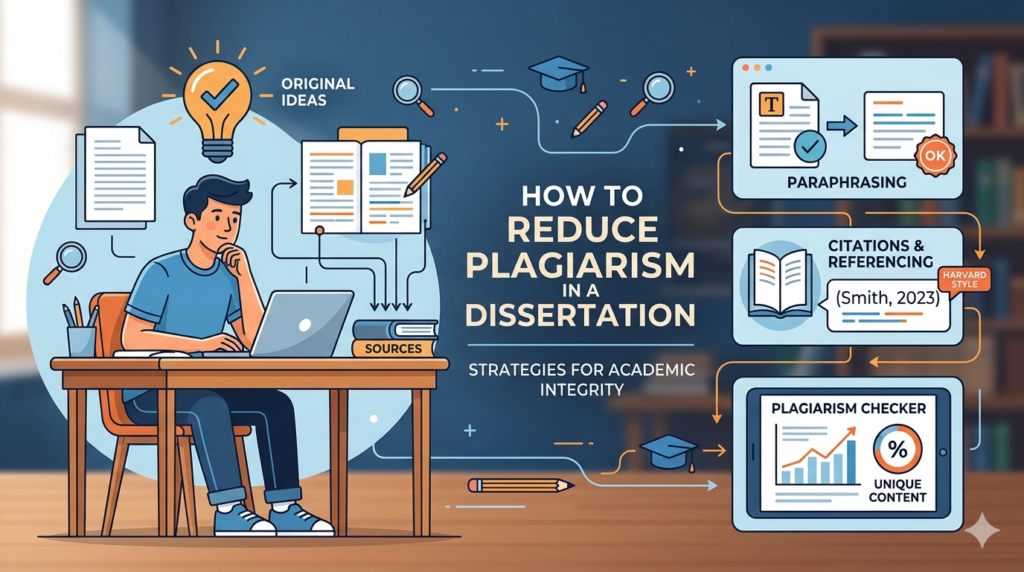
To reduce plagiarism in a dissertation, cite every source as you write, paraphrase from memory rather than editing the original sentence, quote sparingly with quotation marks, then run a genuine Turnitin check before submission. A long project naturally carries some similarity, so the goal is honest attribution and original analysis, not a zero score. Why […]